What types of roofs can support solar? A guide for commercial real estate owners
Can your commercial rooftops support solar installations? Whether you're managing foam roofs, industrial facilities, or aging structures, understanding roof compatibility is essential for turning underutilized rooftops into predictable revenue streams.
The short answer: Most commercial roofs can support solar
The good news? The majority of commercial roofs—including many you might assume are poor candidates—can successfully host solar installations. Modern solar engineering has evolved to accommodate diverse roof types, ages, and conditions. The key is understanding what makes a roof suitable and how to evaluate your specific properties.
Industrial roofs: Built for solar scale
Ideal characteristics
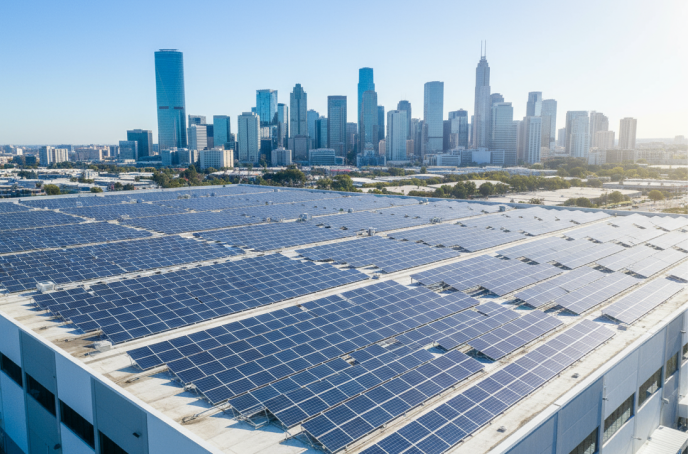
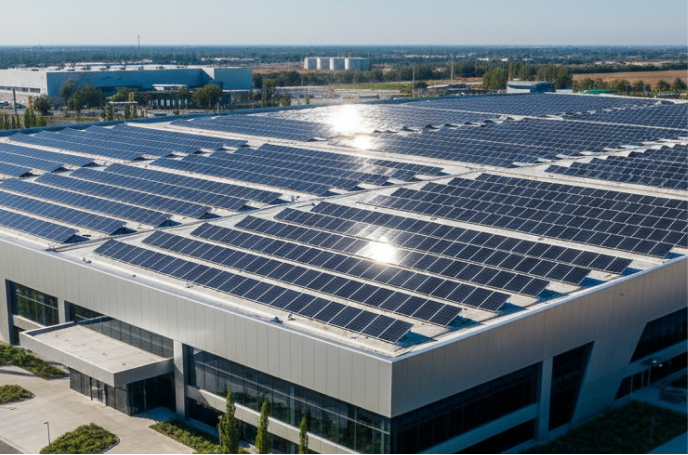
Industrial and warehouse roofs often represent the highest-value solar opportunities in a portfolio. These facilities typically feature:
Large, unobstructed roof planes that allow for efficient solar array layouts and maximize the number of panels per roof area. Unlike multi-tenant office buildings with numerous rooftop HVAC units, industrial roofs often provide 60-80% usable space for solar.
Robust structural design means most industrial buildings were engineered with significant load capacity margins. Manufacturing facilities, distribution centers, and warehouses commonly support 20-30 pounds per square foot of additional dead load—more than sufficient for modern solar systems that typically add 3-5 pounds per square foot.
Single-story construction simplifies installation logistics and reduces project costs. Ground-accessible roofs with lower elevation mean faster installation timelines and lower labor costs compared to high-rise installations.
Common industrial roof types
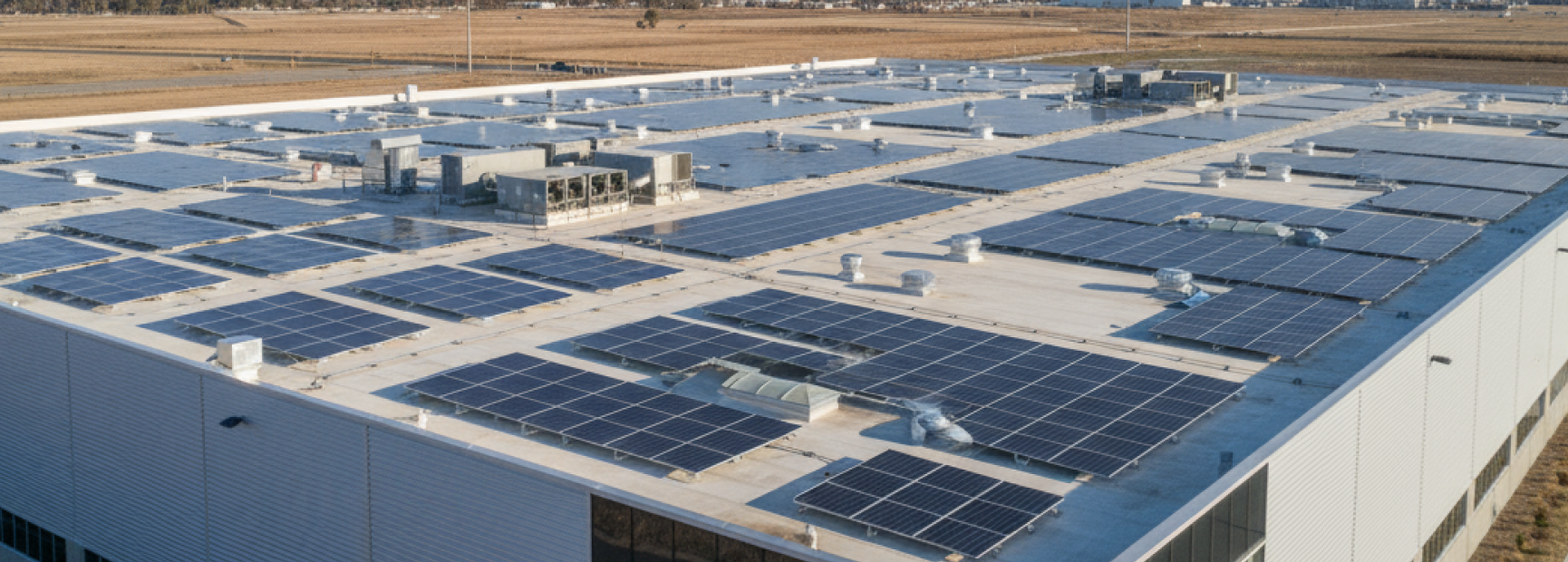
Thermoplastic (TPO/PVC) membrane roofs accommodate both ballasted and mechanically-attached systems. Penetrations, when needed, are sealed with membrane-compatible flashings that integrate with the existing roof system.
Built-up roofing (BUR) and modified bitumen systems work well with ballasted racking systems. The solar array uses concrete blocks or structural ballast to hold panels in place through gravity and wind resistance, often requiring zero roof penetrations.
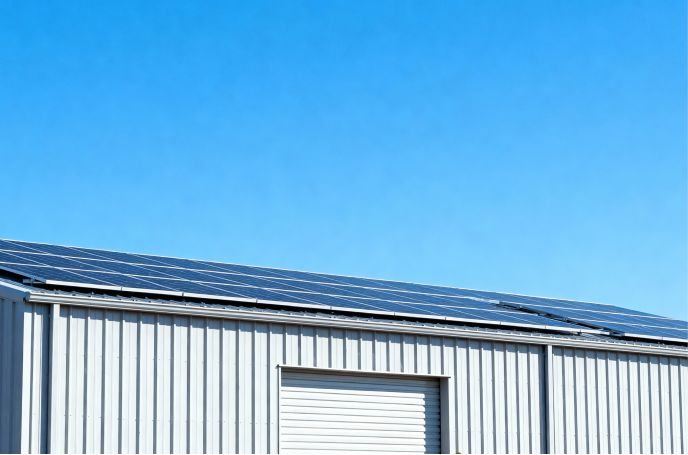
Metal standing seam roofs are the gold standard for metal roof solar installations. Clamp-based mounting systems attach to the seams without roof penetrations, eliminating waterproofing concerns entirely. These installations are fast, clean, and preserve roof warranties.
Older roofs: Age isn't always a barrier
When age matters (and when it doesn't)
Roof age is less important than roof condition. A well-maintained 15-year-old roof can be a better solar candidate than a poorly maintained 5-year-old roof.
Remaining useful life is the critical metric. Solar projects typically involve 20-25 year agreements, so roofs should have at least 10-15 years of light maintenance life remaining. However, this doesn't mean older roofs are automatically disqualified.
Strategic re-roofing can unlock solar potential. When a roof requires replacement within 2-3 years, coordinating the re-roof with solar installation often makes financial sense. Many solar developers will incorporate roof replacement into the project scope, and in rooftop leasing arrangements, the increased rental income can offset re-roofing costs.
For roofs with more than a few years of light maintenance life remaining but less than the 20-25 years needed for full solar project life, re-conditioning with a liquid applied roof coating before solar installation can produce a new 20-25 year protection warranty at a fraction of the cost of a new roof.
What Lumen Energy evaluates
Our Lux Engine analyzes roof age alongside local solar incentives, utility rates, and property-specific factors to determine true solar viability. A 20-year-old roof on a property with strong rooftop leasing incentives and high electricity costs may still deliver attractive returns—especially if strategic re-roofing or re-conditioning is factored into the financial model.
Every property receives rigorous technical and financial underwriting that accounts for:
- Current roof condition and projected maintenance needs
- Local climate and weather patterns affecting roof longevity
- Project economics including any required roof work
- Long-term performance and revenue projections
Roof warranties and solar
Many commercial real estate owners worry that solar installation will void their roof warranty. In practice:
Most roof manufacturers have established solar installation guidelines that, when followed, preserve warranty coverage. Leading solar developers maintain direct relationships with major roofing manufacturers and follow approved installation protocols.
Warranty preservation agreements are standard in quality solar installations. These documents, signed by both the solar developer and roofing contractor, confirm that installation methods comply with warranty requirements.
Your Lumen Advisor ensures that all solar proposals include proper warranty documentation and that developers follow manufacturer-approved methods. This is part of our white-glove service—we sit on your side of the table to protect your interests throughout the process.
Structural capacity: The real determining factor
Understanding load requirements
Regardless of roof type or age, structural capacity is the fundamental consideration. Modern solar installations are remarkably light:
Typical solar systems add just 3-5 pounds per square foot with ballasted racking, or even less with mechanical attachment systems. For context, that's roughly equivalent to an inch of snow accumulation.
Building codes in most jurisdictions already require roofs to support snow loads of 15-40+ pounds per square foot (depending on climate zone). This means the majority of commercial buildings have more than adequate structural capacity for solar.
When excess structural capacity is limited
In rare cases where existing structural capacity is marginal:
Designs needing less weight to prevent uplift such as those that produce East and West facing solar panel “tents” place a reduced burden on the structure in exchange for a small penalty in energy produced per solar panel.
Optimized array layout can work around structural limitations. By concentrating panels in areas with higher load capacity or using lighter mounting systems, engineers can often achieve strong project economics even with constraints.
Beyond roof type: Other factors that matter
Roof size and layout
Minimum efficient array size is typically 20-30 kW, requiring roughly 1,500-2,500 square feet of usable roof space. However, larger arrays (100+ kW) generally deliver stronger financial returns due to economies of scale.
Shading analysis identifies obstructions from neighboring buildings, trees, or rooftop equipment. Modern solar design software generates hour-by-hour shading projections, ensuring accurate energy production forecasts.
Roof orientation affects panel efficiency but rarely disqualifies a property. While south-facing roofs are optimal in the U.S., east-west configurations and even north-facing installations can be financially viable depending on local utility rates, rooftop leasing premiums, and other incentives.
Local building codes and regulations
Building code requirements vary by jurisdiction and may affect:
- Fire setbacks requiring panel-free zones at roof edges and ridges
- Wind uplift requirements influencing ballast quantities or attachment methods
- Seismic considerations in earthquake-prone regions affecting racking design
Lumen Energy's portfolio intelligence includes jurisdiction-specific code requirements, ensuring projects comply with all local regulations from the outset.
Utility infrastructure and grid connection
The electrical service capacity and utility interconnection process can impact project feasibility:
Behind-the-meter solar installations require adequate electrical service capacity to safely integrate solar production. Many commercial properties have sufficient capacity, but the due diligence process verifies this for every project.
Rooftop leasing projects (often part of community solar programs) send power to the grid and provide rental income to property owners rather than directly offsetting building electricity use. These projects have different interconnection requirements and often benefit from policy incentives that make them attractive even for properties with lower electricity consumption.
How Lumen Energy determines your roof's solar potential
Our three-pillar approach
1. Investment-grade analysis powered by our Lux Engine evaluates every property in your portfolio with financial and technical rigor. Within days, you'll understand which roofs offer the strongest opportunities and what returns to expect.
2. Competitive bidding through our developer marketplace ensures you receive optimal terms. We surface and vet proposals from top solar developers, creating transparent competition that benefits you.
3. White-glove service throughout the process means you have a dedicated Lumen Advisor managing complexity and protecting your interests at every step—from initial analysis through project completion.
The evaluation process
When you engage Lumen Energy, here's what happens:
Portfolio screening analyzes your entire property portfolio using satellite imagery, property data, utility information, and local incentive structures. This automated feasibility underwriting identifies high-potential properties in hours, not weeks.
Detailed technical assessment follows for priority properties, including roof condition evaluation, and site-specific energy modeling.
Financial modeling delivers property-specific financial models showing 20-year cash flows, return metrics, and sensitivity analysis. Whether you're interested in Behind-the-Meter (BTM) systems to reduce operating costs or rooftop leasing arrangements to generate zero CapEx revenue streams, you'll see clear projections tailored to your investment criteria.
The bottom line for asset management teams
Most commercial roofs can support solar—including industrial facilities and older structures. The question isn't whether your roof type is compatible, but whether the project economics align with your portfolio strategy.
Industrial roofs often represent your highest-value opportunities with large, accessible roof planes. Older roofs can still host profitable solar installations when remaining useful life and project economics are properly evaluated.
As the modern solar broker, Lumen Energy removes the guesswork. Our technology-enabled approach gives you clarity and confidence about your portfolio's solar potential—property by property, with investment-grade rigor.
Ready to understand which of your roofs can turn into predictable revenue streams? Your Lumen Advisor can provide comprehensive portfolio analysis and answer your property-specific questions.
Frequently asked questions
Do solar panels damage roofs?
When installed properly by experienced developers following manufacturer guidelines, solar installations do not damage roofs. Quality installations include proper flashing, sealing, and attachment methods that maintain or enhance roof integrity. Lumen Energy ensures all developers in our competitive marketplace meet rigorous installation standards.
Will solar installation void my roof warranty?
Not if done correctly. Most roof manufacturers have approved solar installation methods that preserve warranties. Lumen Energy requires all solar proposals to include warranty preservation documentation and ensures developers follow approved protocols.
How much weight do solar panels add to a roof?
Typical commercial solar installations add 3-5 pounds per square foot, well within the structural capacity of most commercial buildings. Our technical analysis includes structural verification for every project.
Can I install solar on a roof that needs replacement soon?
Yes. Strategic coordination of roof replacement with solar installation often makes financial sense. Many solar developers can incorporate re-roofing or re-conditioning into the project scope, and in rooftop leasing arrangements, rental income can help offset re-roofing costs.
What's the difference between Behind-the-Meter solar and rooftop leasing?
Behind-the-Meter (BTM) solar generates power for your building's use, directly reducing utility costs. Rooftop leasing (often part of community solar programs) means a solar developer leases your roof space, installs solar, and pays you rent—generating income without reducing your building's electricity costs. Both can be attractive depending on your property characteristics and goals.